






 Facebook
 Instagram
 LinkedIn
 Youtube
Heat Transfer Printing: How It Works and Benefits Across Different Industries

Written by
Karin Goffe
Printing methods
Thermal transfer printing is a versatile and durable printing method that is very popular due to its many advantages and areas of application. Thermal transfer printing, not to be confused with textile transfer printing, is primarily used for label printing and product marking. At Hot Screen, we specialize in transfer printing as used in the textile industry. That is why, in this blog post, we not only explain everything you need to know about thermal transfer printing, but also highlight the differences and similarities between the two printing methods.
What Is Thermal Transfer Printing?
Thermal transfer printing is a printing process in which the desired image is transferred onto a specific material through the selective application of heat. The resulting print is highly durable and can be applied to a wide range of materials.
The method is suitable for small production runs, as it is cost-effective even at low volumes, but it can also be scaled for large orders. It is ideal for high-quality labeling of products, packaging, and industrial markings.
How Does Thermal Transfer Printing Work?
In thermal transfer printing, a special ribbon coated with heat-sensitive ink is fed between a sheet of paper (or another substrate) and a thermal print head. The print head contains hundreds of computer-controlled heating elements that can be activated with high precision. When a heating element is activated, the ink layer on the ribbon melts at that exact point and is transferred to the substrate.
The result is a precise, high-quality print with an impressive surface finish, which distinguishes thermal transfer printing from many other printing methods.
Thermal Transfer Printing vs. Direct Thermal Printing: Which Method Is Best for Textiles?
Thermal transfer printing and direct thermal printing are both widely used printing technologies, but they differ in several key ways. One of the main differences is that direct thermal printing relies on heat-sensitive material that darkens when exposed to heat, whereas thermal transfer printing uses a ribbon to transfer ink. This makes thermal transfer printing particularly suitable for industrial applications and increasingly relevant for durable textile-related labeling.
Direct Thermal Printing
Direct thermal printing involves printing directly onto special heat-sensitive paper that darkens when heated. The paper contains colorless particles and wax that turn black when exposed to heat. The prints are typically monochrome (black), though some two-color variants exist.
The advantages of direct thermal printing include speed and cost efficiency, as no ribbon is required and fewer printing steps are involved.
A key disadvantage is limited durability. Direct thermal printing is mainly used for applications such as receipts, tickets, shipping labels, and vouchers, where long-term durability is not required.
The choice between the two printing methods depends on the specific requirements of each project.
Applications of Thermal Transfer Printing
Thermal transfer printing is used across a wide range of industries. In addition to label printing and product marking, it plays an important role in many industrial applications.
Examples include:
- Food Industry: Printing product information, barcodes, and expiration dates on food packaging.
- Pharmaceutical Industry: Labeling of medicine packaging.
- Ticketing Systems: Tickets and receipts are often printed using thermal transfer printing.
- Packaging Industry: Printing on packaging materials such as films and cartons.
- Healthcare: Printing labels for medication packaging and patient records.
Thermal Transfer Printing FAQ
Advantages of Thermal Transfer Printing
Thermal transfer printing offers high print quality, durability, versatility, and reliability. Sharp, high-contrast print results are ideal for labeling and barcodes. Prints are resistant to external influences, and ribbons have a long shelf life, making the process economical. This is why thermal transfer printing is widely used in labeling, packaging, and industrial marking.
Disadvantages of Thermal Transfer Printing
Limitations include a restricted color range. Thermal materials may fade when exposed to light, heat, or chemicals. For security-critical applications, thermal transfer prints may be unsuitable, as impressions can remain visible on the used ribbon.
Thermal Transfer Printing vs. Textile Transfer Printing
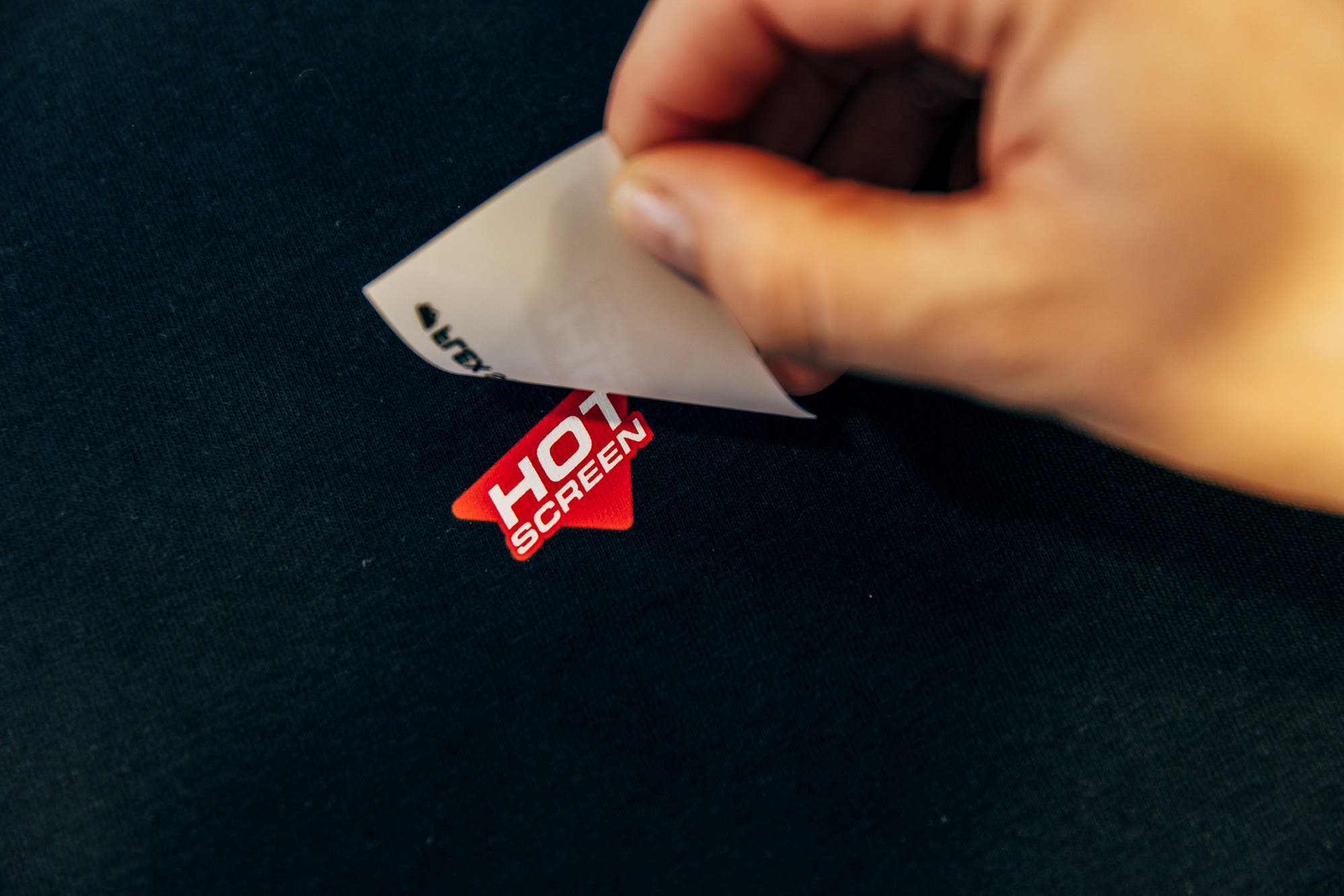
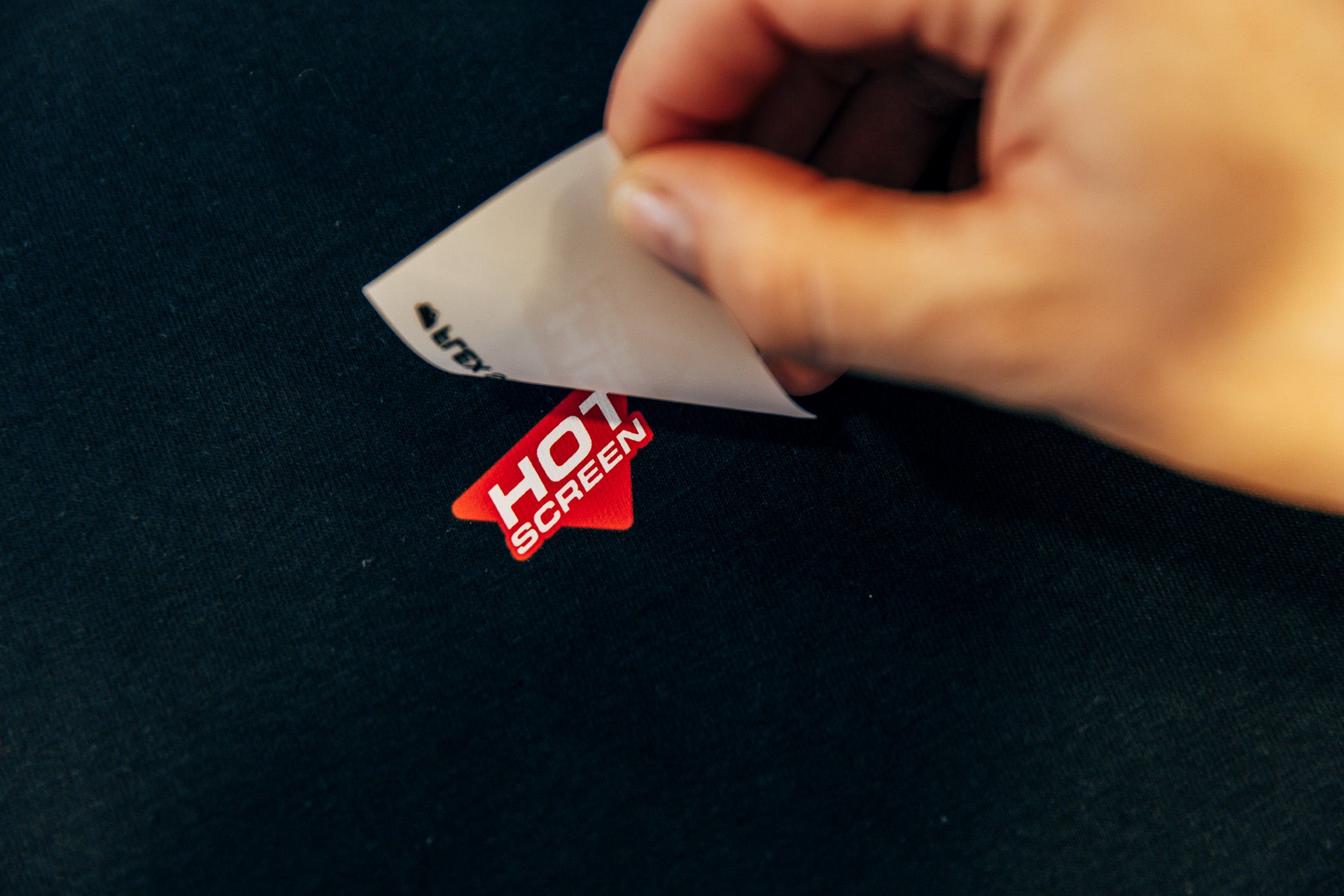
Thermal transfer printing is primarily used for product labeling, while transfer printing is used for textiles. Both methods rely on heat to create durable, long-lasting prints. Hot Screen’s textile transfers adhere for the entire lifespan of the garment and can be stored for up to five years without any loss of quality.
About Hot Screen
With over 30 years of experience in the industry, Hot Screen is one of Scandinavia’s leading transfer printing companies. We are committed to providing our customers with high-quality products at fair prices, while offering solutions that are as environmentally friendly as possible.


