






 Facebook
 Instagram
 LinkedIn
 Youtube

Printing on softshell

Written by
Karin Goffe
Application
Garments
Printing on softshell
– watch the video below or read the guide.
Can you print on softshell?
Some softshell garments have a tendency to bleed through or “migrate” (as some people call it) through the heat transfer, which damages the appearance of the transfer. It might look blotchy or even as if the decal has become mouldy, but we can combat this if we start things off right.
We also have accessories in our webshop called “BLOCKER”, meaning that your transfers are of the same quality as an ordinary heat transfer but with the added property that they prevent/slow down bleeding on most materials.
What are blocker transfers?
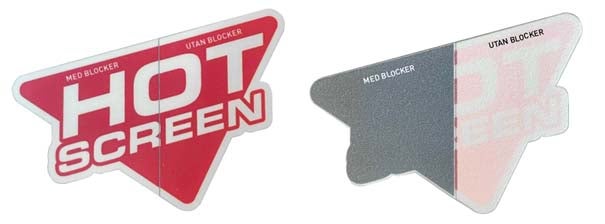
We have produced an accessory to combat and minimise this phenomenon in the best possible way. We call this accessory a “BLOCKER” but it is often known as “block-out, block, blocking or black blocking”. This barrier is made up of several layers which are printed behind the motif, making the print thicker but also preventing migration in the majority of cases. Our blocker is easy to recognise because it has a grey back, instead of white.
When do I need blocker?
As mentioned above, it is softshell materials that are most frequently affected by this phenomenon, and we have also noticed over the years that after a while bleeding occurs in almost every case. That’s why we ALWAYS recommend getting yourself a BLOCKER if you’re planning to apply transfer prints to these sorts of garments.
We recommend talking to your garment supplier to see if they have ever had any issues with migration. If you cannot get any information from your supplier, we will be more than happy to help you test your material in our test laboratory where you can get a test report.
How do I apply a transfer print?
1. First, we recommend shrinking the item of clothing at 160⁰C or 130⁰C, depending on which of our products you want to apply. To do this, press the heating plate directly onto the item for 8–10 seconds. This shrinks and stabilises the item ahead of the heat transfer, creating the best possible conditions for a correct heating process.
2. Place your heat transfer on the item of clothing where you want to apply it and make sure that the entire area that the heating plate is pressed onto is flat and free from zips and pockets.
3. Check that your transfer press is configured correctly for the product and under plate you have selected.
4. Begin applying your heat transfer.
5. Then remove the transfer carrier immediately after the application is complete.
ATTENTION! Applying a heat transfer to softshell clothing that hasn’t been pre-heated can produce poor results and in the worst-case may destroy the item of clothing.
TIP!
We recommend always using a BLOCKER for applications on softshell material to combat bleeding.


