






 Facebook
 Instagram
 LinkedIn
 Youtube

Screen Printing vs Transfer Printing

Written by
Karin Goffe
Printing methods
Products
What is screen printing?
Screen printing is a printing method where ink is pressed through a fine mesh screen using a rubber squeegee. This can be done manually at home or with specially designed machines. Compared to transfer printing, transfer or sublimation printing can be seen as a further development of the same principle. Instead of printing directly onto the fabric, the design is printed onto a transparent polyester film, known as a carrier. One advantage is that the finished transfer can be shipped to the customer and later applied to garments using a heat press. Transfer prints are also more durable and of higher quality.
In this printing guide, we take a closer look at both techniques and compare them.
Screen printing – a thousand-year-old printing method from China
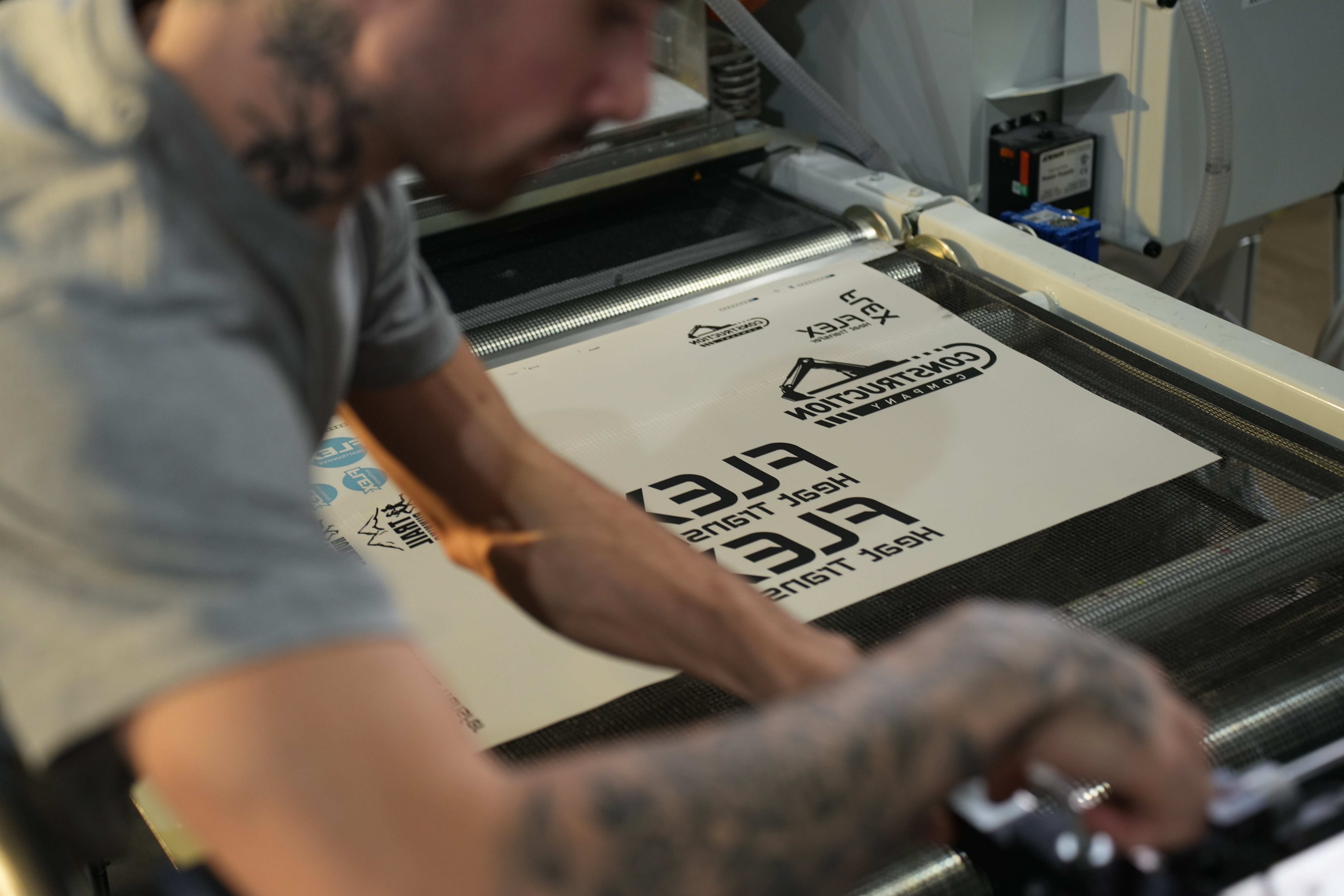
Screen printing was used in China as early as 2,000 years ago. Although the method has been refined over time, the basic principle remains the same: frames with a special mesh that allows ink to pass through in specific areas. One frame is required per color, meaning that a certain number of frames must be prepared for each print job.
The frames are treated with emulsion and exposed to light to create the desired design, and a squeegee spreads the ink evenly across the surface. Once the printing is complete, the print is cured using heat. Screen printing is most commonly used on T-shirts, tote bags, and other garments that can accommodate the frame. The method can also be used to produce items such as posters.
Transfer printing – increasingly replacing screen printing
In recent years, transfer printing has increasingly replaced traditional screen printing, especially when printing multiple small logos, such as sponsor logos on teamwear. Textile transfer printing is also commonly used for small or hard-to-print items where screen printing is not suitable.
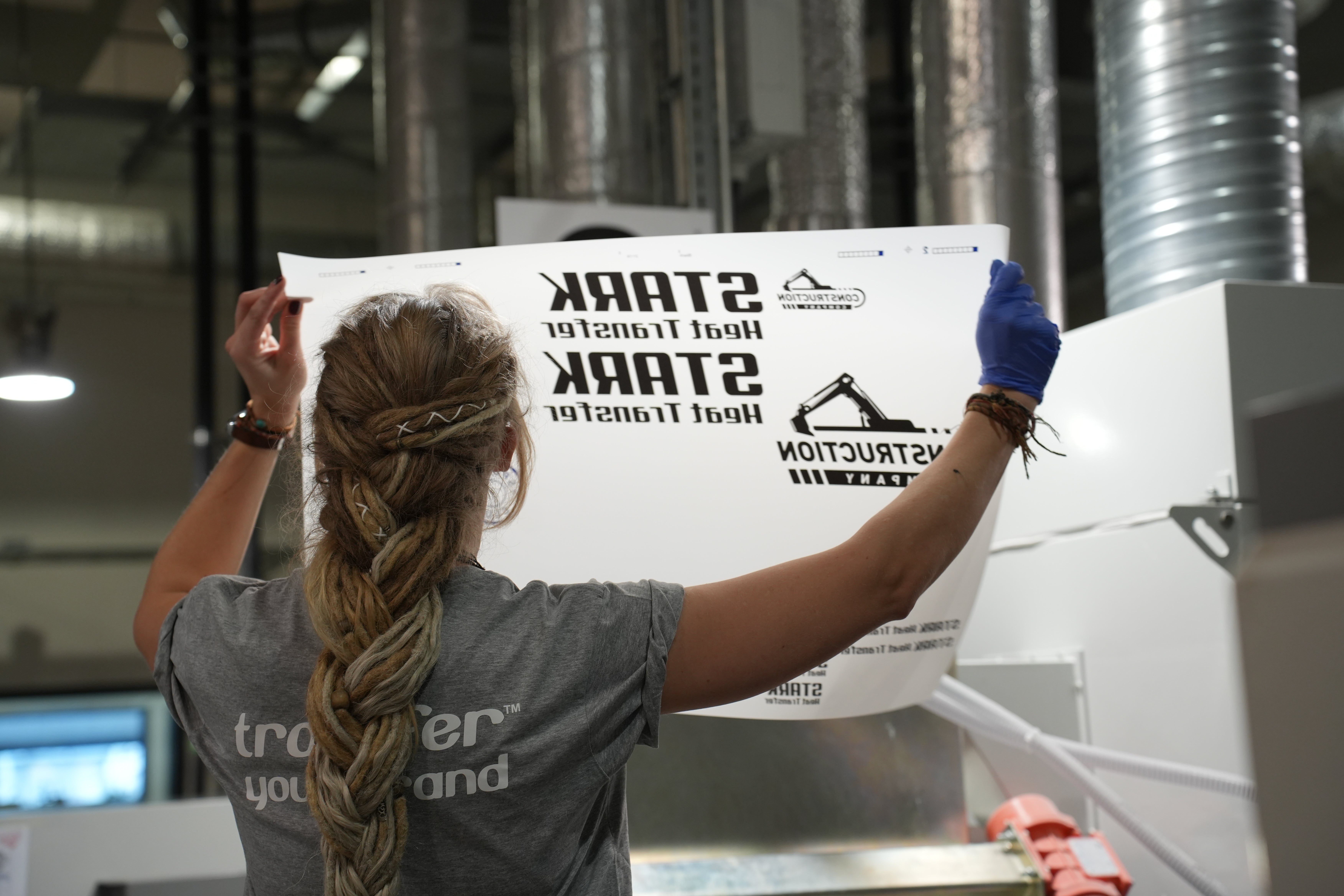
The technique is based on screen printing but prints the logo or design in reverse onto a carrier (polyester film) instead of directly onto the garment – one frame per color. A powdered adhesive is then applied to the back of the carrier, which bonds with the textile fibers when the transfer is later applied to a garment using a heat press.
Which is best: screen printing or transfer printing?
Screen printing and textile transfer are based on the same fundamental process and are therefore similar. Both methods can be environmentally friendly, depending on the type of ink used and, in our case, through the use of our own water treatment system. Both offer excellent control over the print, with accurate color reproduction and fine details. Colors can also be mixed precisely according to your requirements.
Compared to other printing methods, such as plot printing, transfer printing is increasingly preferred—especially for garments that are small or difficult to print. Our heat transfers can be applied almost anywhere on most textiles, including hats, caps, bags, and backpacks, even near zippers and buttons.
We offer a low unit price per transfer and produce both small and large quantities, including reflective and photo-effect designs. Our heat transfers can be stored for at least five years and are durable, environmentally friendly, high quality, and long-lasting—often lasting as long as the garment itself. As a customer, you also avoid handling inks, which can be a messy process. Our products are ready to press, making transfer printing a simple and efficient alternative to screen printing.


